Shannon Switzer Swanson
Hi! You wanted to know a bit more about me?
I believe that caring for the natural world is both a practical responsibility of stewardship, and a deeply meaningful human endeavor.
I came to marine science sideways. Before I was ever a scientist, I was a photojournalist, chasing conservation and travel stories with a camera instead of a clipboard. That habit never left me: I still think the truest data about a place comes from the people living in it, not just the numbers collected about it.
Before the PhD
A camera before a clipboard
My path into marine science started with a camera, not a lab notebook. I grew up surfing off the San Diego coast, sometimes in water I probably shouldn't have been in. That's the honest starting point for most of what I do now.
The field years
In 2006 I crewed aboard the sailboat Swell from San Diego to Costa Rica, and that trip is where the questions really started. Afterward I built a conservation photography portfolio the only way I knew how: by going. Six months in the Seychelles documenting whale shark and cetacean behavior. Six months in Uganda studying chimpanzee behavior and disease transfer between humans and chimps, funded, more or less, by waitressing tips.
I came back to Santa Barbara to write and photograph for the Santa Barbara Independent, worked with a documentary production company, and assisted National Geographic photographer Thomas Peschak on assignment in the Yucatan, which is how I first learned about NG's grant program. A National Geographic Young Explorer grant let me trace pollution from headwaters to river mouth along San Diego County's San Dieguito River, and later stand-up paddle roughly seventy miles from Trestles to the Tijuana River to raise money for coastal conservation back home.
That project is what sent me back to school. Seven years after finishing at UCSB, I wanted an actual area of expertise to bring to the human-ocean questions I couldn't stop asking.
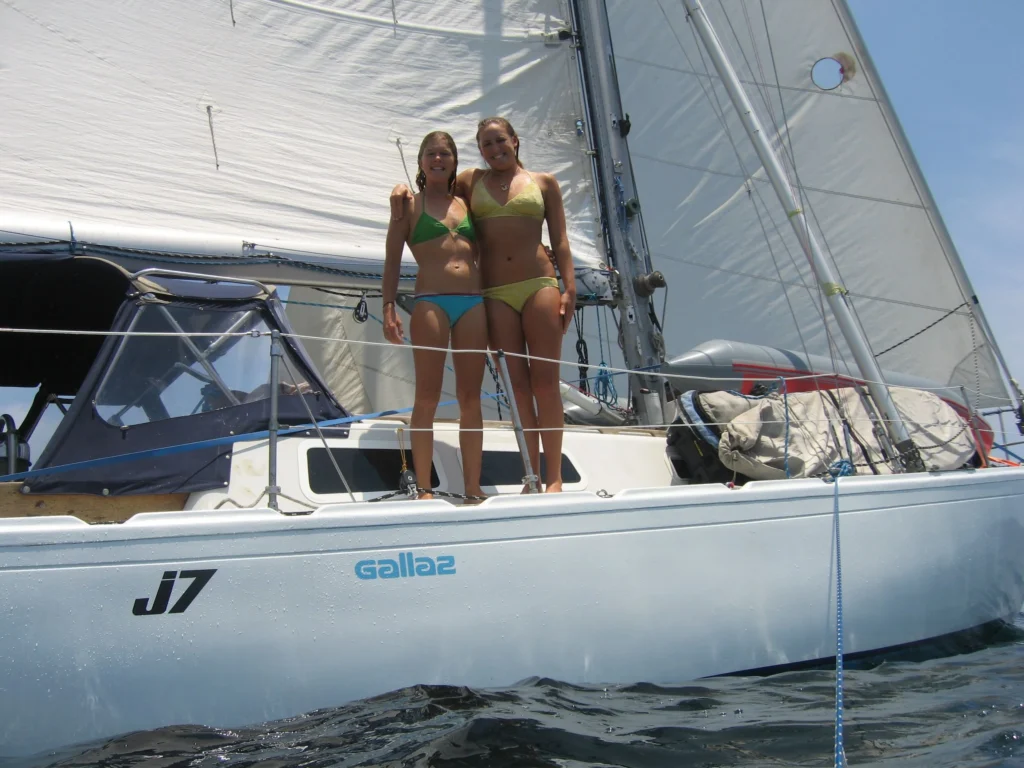
Photo by Liz Clark
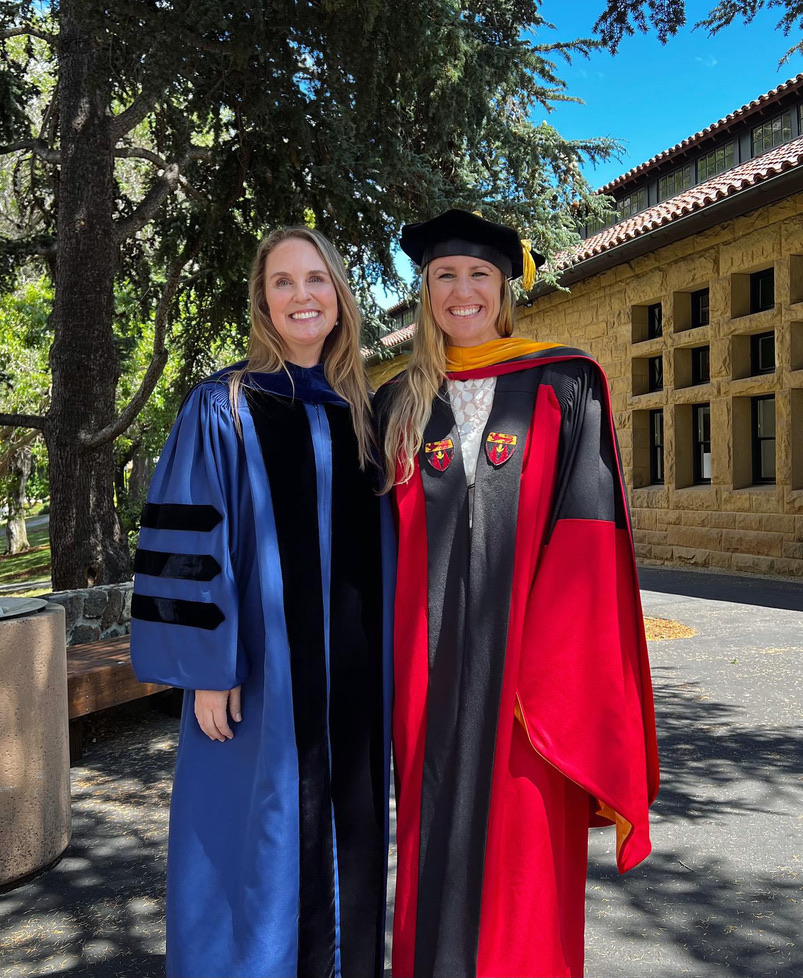
And then there was a PhD!
Back to school
After seven years away from the classroom, I went back, first a Master's in Coastal Environmental Management at Duke, then a PhD at Stanford. raduate school took me back into the field, first with a master's at Duke, then a PhD at Stanford through the Emmett Interdisciplinary Program. My dissertation research put me in the Banggai Archipelago of Central Sulawesi, Indonesia, living among the Sama Bajau and neighboring fishing communities for the better part of a year, using a participatory method called photovoice to hand the camera back to the people I was studying rather than only pointing it at them.
It reshaped how I think about ownership and participation in research. I went in curious about why some fishers use destructive practices like blast or cyanide fishing, and came out understanding that those practices are a small part of much larger, more human concerns, family, provision, daily survival. I was there in 2018 when a major earthquake hit and the whole island feared a tsunami; it's one of the more clarifying nights of my life, and one I don't take for granted.
The same question followed me to the Verde Island Passage in the Philippines, where my master's research evaluated a mangrove restoration and livelihood program, and now follows me home, into a statewide study of who actually gets access to California's own coastline.
That fieldwork asked a lot of me: patience with unreliable electricity and slow-going field notes, humility working across cultures very different from my own.
It also gave me an intimate window into how differently people can know the sea, especially families whose lives run on the tide and the moon in ways mine never will.
Now
I've been a National Geographic Explorer since 2010, and in 2017 they named me Adventurer of the Year for that body of work. I co-hosted a National Geographic Channel documentary with actor and activist Adrian Grenier, The Last Drop, on the drought in the American West.
Passing on the knowledge
Today I teach at California State University San Marcos, where I bring all of it, the fieldwork, the photography, the questions I still haven't answered, into the classroom. My current research asks a version of the same question I started with, just closer to home: who has access to California's coastline, and who's been left out of deciding that.
Quick facts:
Assistant Professor, Environmental Studies, CSU San Marcos: 2022–present
PhD, Environment & Resources, Stanford University: 2022
MEM, Coastal Environmental Management, Duke University: 2015
BS Biological Sciences / BA Environmental Studies, UC Santa Barbara: 2005
National Geographic Explorer: 2010–present

Want the full record?
The complete academic CV and a media-ready press kit, for journalists, event organizers, and anyone putting together a formal introduction.