Learning with Shannon
Learn with me.
Classes, mentoring, and resources for anyone doing this kind of work.
Training the next generation of environmental scientists at CSU San Marcos through immersive fieldwork, qualitative methods, and narrative communication.
I teach environmental policy and impact analysis, community-based environmental management, and marine social science at CSU San Marcos. Because ours is a small department, I end up teaching across a wide range of topics, from environmental policy and impact analysis to community-based environmental management to a course I built from scratch on marine social science. I like it that way. Most of what I teach comes straight out of what I'm still learning in the field.
Grab my resources!

Community Best Practices
Action-research with communities is the bedrock of great research. Here's how to do community work correctly.
Visual Participatory Best Practices
Engaging in visual, participatory research?
Here's a simple guide to establishing and conducting the research.
Other Learning Resources
Engaging in visual, participatory research?
Here's a simple guide to establishing and conducting the research.
What I teach
At CSU San Marcos
Restructured to pair students directly with community partner organizations on live conservation projects.
I re-envisioned and restructured our senior capstone course in Environmental Studies, and built relationships with 15 community partner organizations, including Surfrider, so students pair directly with an organization to design and carry out a real conservation project rather than a hypothetical one.
Subjects I teach
ENVS 100: Introduction to Environmental Studies
COURSE DESCRIPTION:
Multidisciplinary exploration of human interactions with the natural world, linking scientific observations with social, ethical, and political realities.
Topics & Required Reading:
Focuses on developing critical thinking skills across complex modern challenges such as global climate disruption, marine pollution, and biodiversity conservation.
Syllabus Highlights: Interdisciplinary systems pathways, social justice & resource access, human footprint dynamics.
ENVS 310: Environmental Communication
COURSE DESCRIPTION:
Analyzing the role of text, imagery, and interactive media in framing ecological issues and driving conservation policy.
Topics & Required Reading:
Students learn how to convert complicated scientific jargon into sticky, memorable, human narratives for broad public and media audiences.
Syllabus Highlights: Photojournalism on the frontlines, video media strategy, countering climate fatalism with proactive storytelling.
ENVS 320: Environmental Social Sciences & Methods
COURSE DESCRIPTION:
An introduction to qualitative, spatial, and participatory research methods designed to analyze communities and ecosystems as a single unit.
Topics & Required Reading:
Covers the mechanics of ethnography, structured focus groups, spatial mapping, and participatory action research (PAR) tools like Photovoice.
Syllabus Highlights: Human-subject research ethics, framing qualitative feedback, participatory coding and thematic analysis.
ENVS 340: Global Environmental Issues
COURSE DESCRIPTION:
Examining globalized supply chains, international marine agreements, and the transboundary movement of environmental footprints.
Topics & Required Reading:
Follows natural resource paths from harvesting coastal waters to premium city markets, exploring localized agency under international frameworks.
Syllabus Highlights: Live reef food fish pathways, global plastic waste treaties, sustainable development goals (SDGs) in practice.
Guest Lectures
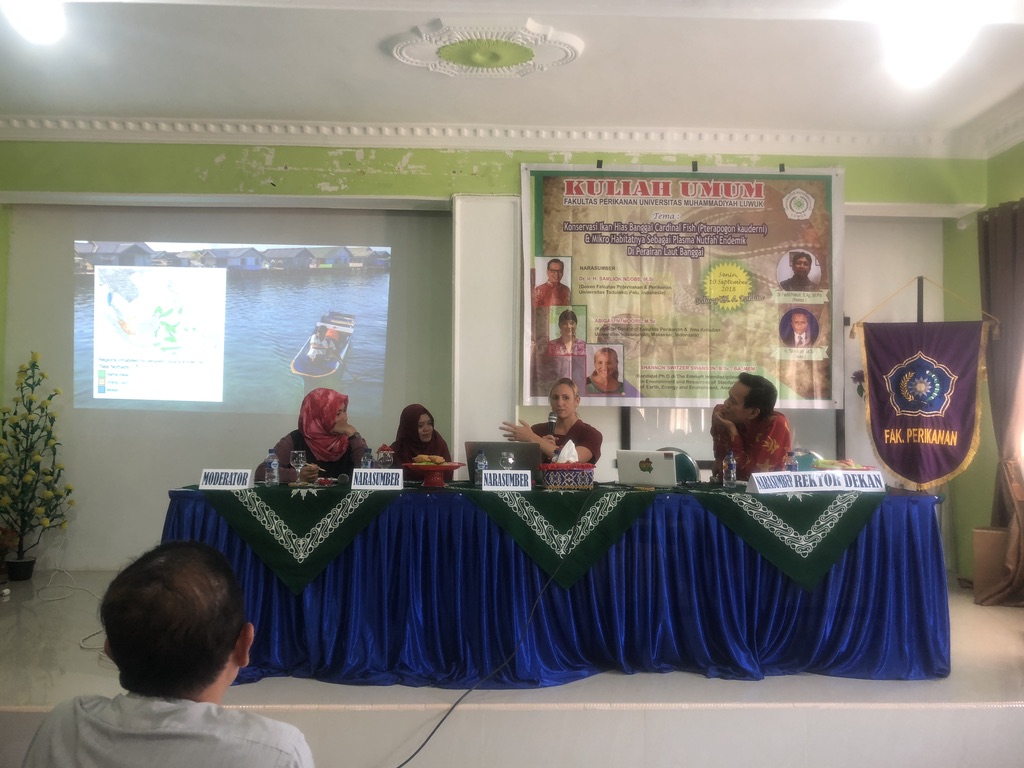
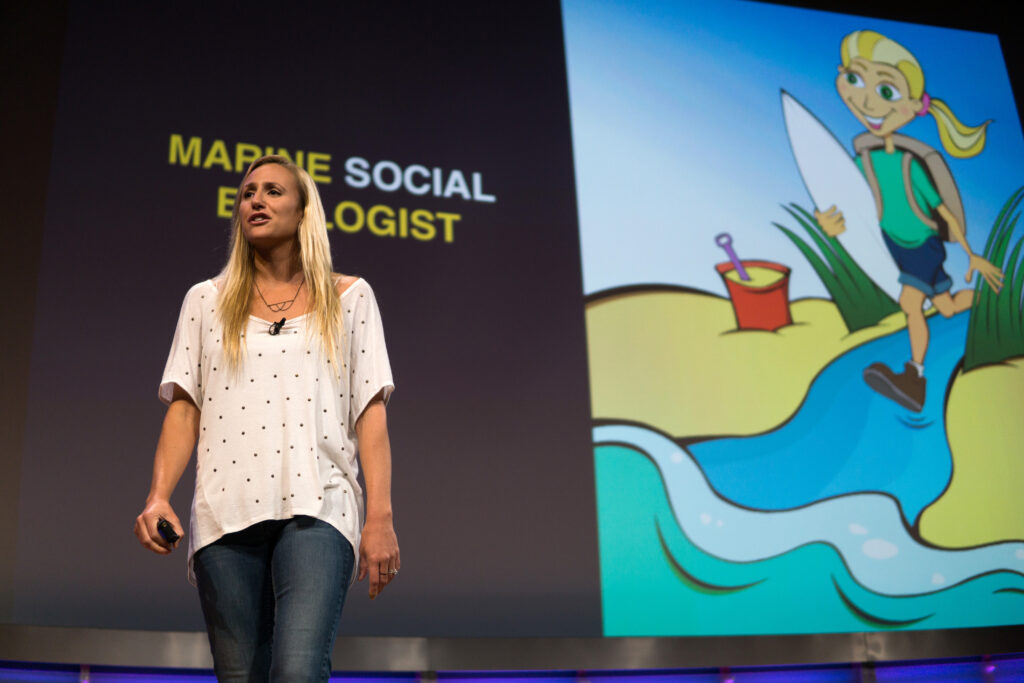
- Global 112: Ocean Imaginaries, Stanford (2025)
- Blue Foods for Indonesia Action Lab, Stanford (2024)
- ENVS 210: Environmental Research Methods, CSUSM (2023)
- Freediving with Aquarium Fishers, Marin Country Day School (2023)
- PH 501: Introduction to Public Health, CSUSM (2022)
Who I work with
Some of the most rewarding parts of this job happen outside a syllabus. I sit on a PhD thesis committee at the University of British Columbia, I'm currently advising a CSUSM PhD project on nature-based financing mechanisms, blue carbon and biodiversity credits, and I mentor undergraduates through independent study and CSU's COAST program.
Service & leadership
- Faculty Co-Director, Environmental Stewardship Association: 2022–present
- Member, Faculty Development Committee: 2023–2025
- Senator, Academic Senate: 2025–present
- Mentor, CSU COAST Program: Summer 2025
- Member, Aquatic Macrofaunal Biodiversity and Conservation Research Group, Hasanuddin University, Indonesia: 2024–present
This is a working list, not the whole record. My complete publication history, with teaching and service, is in my CV.
To get in touch about mentoring, committee positions or studies, please go to my contact page.
I'm an Assistant Professor of Environmental Studies at California State University San Marcos and a National Geographic Explorer. My research examines coastal access, small-scale fisheries, and the communities most connected to the sea.
I bring that work into the classroom and into public storytelling