

Shannon Switzer Swanson
Marine Social Ecologist
National Geographic Explorer
About Shannon
I am a marine social ecologist, a National Geographic Explorer, and a storyteller.
For as long as I can remember, my life has been defined by the Pacific Ocean. I grew up surfing and diving the coast of San Diego, viewing the sea as a playground and a sanctuary. However, my perspective shifted profoundly during a voyage across the Pacific aboard the sailboat Swell. Living on the water, reading Rachel Carson’s The Sea Around Us, and witnessing the direct collision of human need and fragile ecosystems, I realized something critical:
We cannot save the ocean if we do not understand the people who depend on it.
This realization took me from the deck of a sailboat to the classrooms of Duke and Stanford, and finally to my current role as an Assistant Professor. Today, I work at the intersection of psychology, culture, and ecology. I don’t just count fish; I listen to fishers. I study the “psycho-cultural” drivers of conservation—why we do what we do, and how we can build a future where both coastal communities and marine ecosystems thrive.
Caring for Oceans
Caring for People
Proudly associated with
At a glance
Current Role:
-
Assistant Professor of Environmental Studies, California State University San Marcos (CSUSM)
-
National Geographic Explorer (2009–Present)
Education:
-
Ph.D., Environment and Resources, Stanford University
-
Master of Environmental Management, Duke University
-
B.S. Biological Sciences / B.A. Environmental Studies, UC Santa Barbara
Select Media & Recognition:
-
Host: The Last Drop (National Geographic Channel)
-
Honoree: National Geographic Adventurer of the Year (2016)
-
Featured Speaker: Voices for Biodiversity, various academic and public forums.
The Journey: From Story to Science
My career has never been linear. It has been a cumulative evolution of skills, each phase informing the next.
The Explorer & Photojournalist
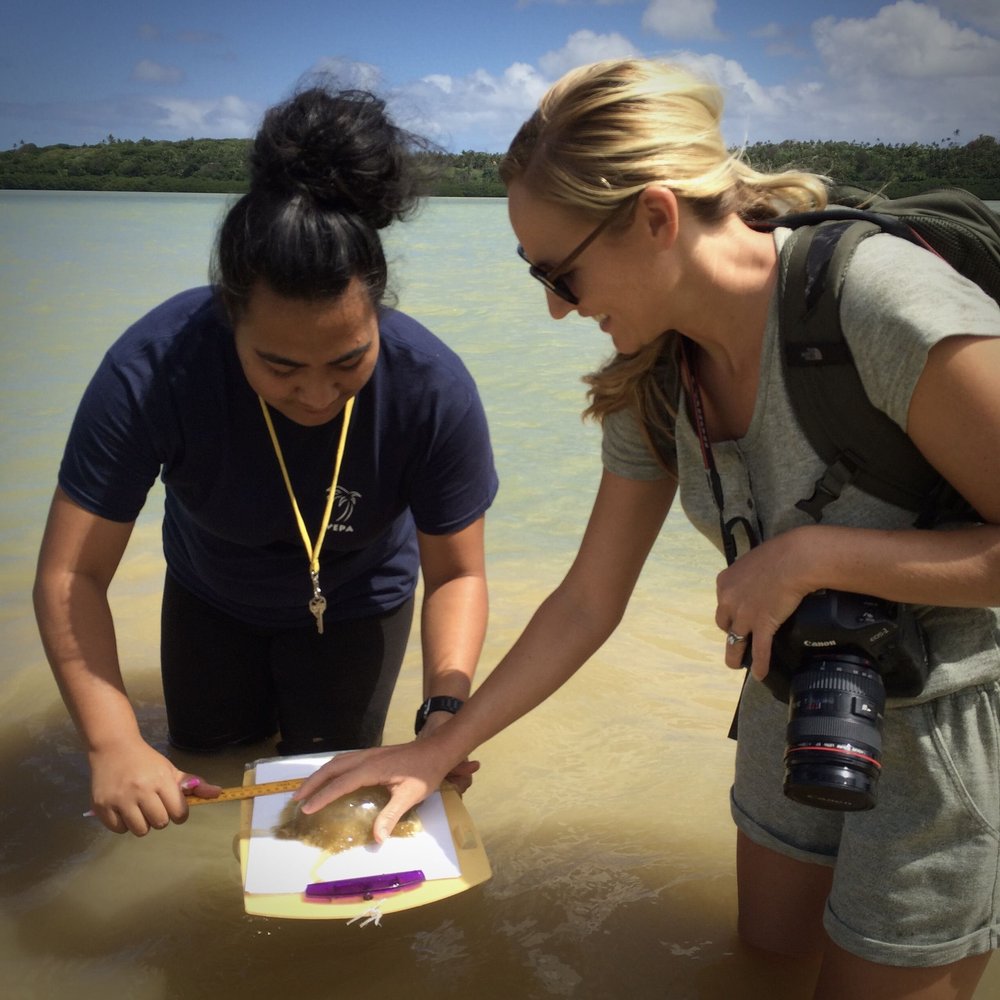
After graduating from UC Santa Barbara, I spent years in the field—often funded by waitressing tips—documenting wildlife and communities. From studying whale sharks in the Seychelles to tracking chimpanzees in Uganda, I learned the power of visual storytelling. In 2009, I became a National Geographic Explorer, launching a “source-to-sea” expedition to document the health of San Diego’s watersheds. This period taught me that data alone rarely changes behavior; stories do.
The Academic Pivot
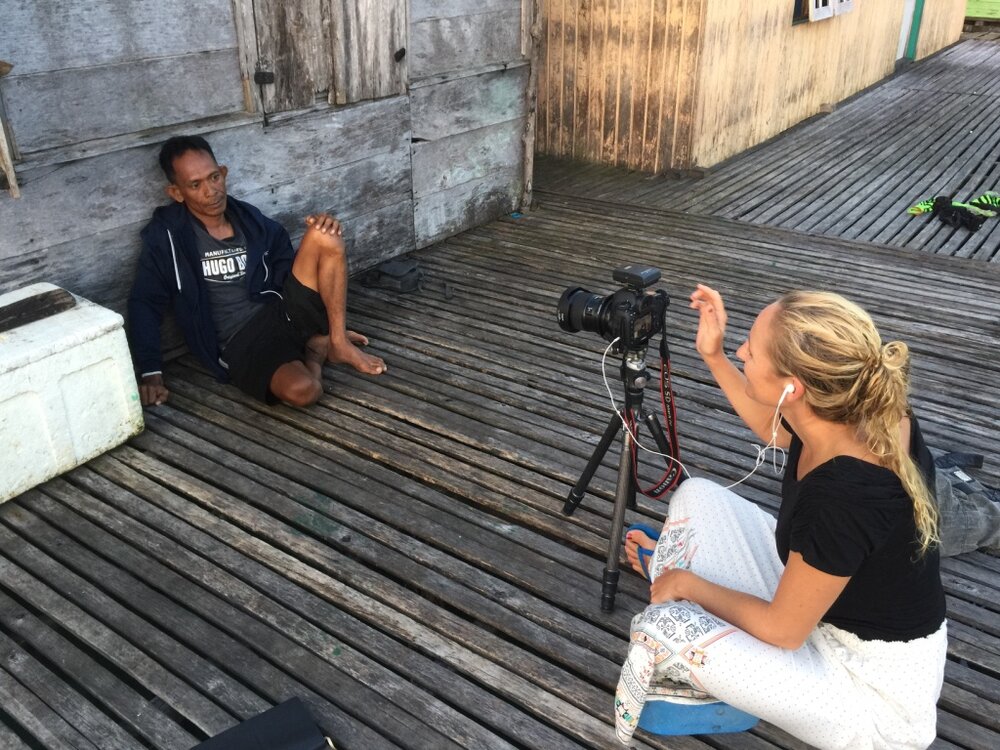
While storytelling raised awareness, I wanted to drive policy. I returned to academia to sharpen my analytical tools, earning a Master of Environmental Management from Duke University and a Ph.D. from Stanford’s Emmett Interdisciplinary Program in Environment and Resources (E-IPER). My dissertation work in Indonesia challenged the standard narratives of overfishing, using Photovoice to let fishing families show us their reality—revealing that what looks like “destruction” to an outsider is often a complex web of survival, tradition, and adaptation.
The Advocate & Educator
In 2016, I was named a National Geographic Adventurer of the Year—not for climbing a mountain, but for ocean advocacy. Today, as an Assistant Professor at Cal State San Marcos, I mentor the next generation of environmental leaders, bringing real-world complexities into the classroom.
My Philosophy: Context-Driven Conservation
My work challenges the historical “fortress conservation” model, which often excludes local people from their own lands and waters. Instead, I advocate for Context-Driven Conservation and Blue Justice.
Beyond Malthus:
I reject the simplistic idea that overfishing is solely caused by “too many mouths to feed.” I investigate the deeper systems of power, global trade (like the aquarium industry), and market access that drive resource extraction.
Visualizing the Invisible:
Whether it’s mapping the supply chain of the Blue Tang (“Dory”) or using virtual reality to transport policymakers to a reef, I use media to make complex supply chains visible and personal.
The Human Dimension:
Effective management requires empathy. We must understand the “worldviews” of coastal communities to design solutions that are equitable and enduring.
Let’s Work Together
I bridge the worlds of academic rigor and public engagement. Whether you are a student looking for guidance, an organization needing deep research into community dynamics, or an event organizer seeking a keynote on the future of our oceans, I am here to help.
Shannon Switzer Swanson
